How Farmington Winters Destroy Lock Cylinders — And How to Prevent It
February 2026: overnight lows hit 17°F in Farmington. By morning, dozens of residents found their deadbolts frozen solid — cylinders that had worked fine in September completely seized. At 5,395 feet elevation, Farmington’s freeze-thaw cycles are more severe than almost anywhere in New Mexico. Here’s what’s actually happening inside your lock.
Why Farmington Locks Freeze: The Physics
A pin tumbler lock has 5–6 spring-loaded pin stacks inside the cylinder. Moisture from rain, snow, or humidity enters through the keyway. When overnight temperatures drop below 20°F, that moisture freezes, expanding inside the cylinder and binding the pins so they can’t move. You insert your key and it won’t turn — or won’t go in at all.
Farmington’s 7.5 inches of annual rainfall combined with 12.3 inches of snowfall creates the exact moisture exposure that damages cylinders. And unlike Albuquerque (5,300 ft, similar elevation but warmer valley), Farmington sits at the confluence of the San Juan, Animas, and La Plata rivers — higher ambient humidity in the air year-round.
The Temperature Swing Problem
Farmington’s 70°F+ annual temperature swing — from 17°F winter nights to 92°F summer days — causes constant expansion and contraction in door frames and lock hardware. Over time, this cycling works screws loose, shifts strike plate alignment, and causes cylinders to develop micro-cracks where moisture collects.
Most Farmington homes built in the 1970s–1990s have original lock hardware that has never been serviced. A cylinder that has cycled through 30–50 Farmington winters is at or past its service life — and one bad freeze will complete the failure.
What to Do When Your Lock Is Already Frozen
If you’re standing at your door at 6am and the key won’t turn, here’s the right order of actions:
- Do not force the key — forcing a key in a frozen cylinder snaps it off inside, turning a $65 lockout call into a $150 key extraction
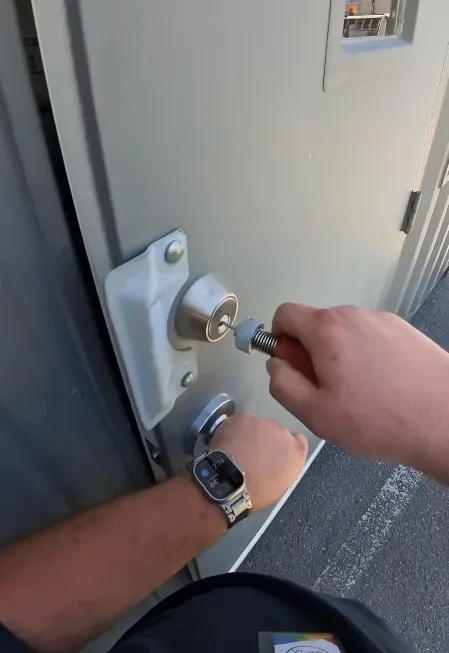
- Use commercial lock deicer — WD-40 Specialist Dry Lube or Prestone Lock Deicer inserted into the keyway — not WD-40 original (it attracts dust and makes the problem worse long-term)
- Apply heat gently — a hair dryer on low held 6 inches from the cylinder for 2–3 minutes; never a lighter or torch (it melts the plastic tumblers)
- Warm your key — heating the key with your hands or briefly on a car vent and inserting it slowly can transfer enough heat to free the pins
- Call a mobile locksmith — if none of the above works in 10 minutes, stop trying. A locksmith can extract and service the cylinder on-site
Fall Maintenance: Prevent the Freeze Before It Happens
The best time to service your locks in Farmington is October — after the heat of summer and before the first hard freeze. A lock service call costs $75–$120 and includes cleaning the cylinder, lubricating with graphite or Teflon-based lubricant, checking and adjusting the strike plate, and testing key operation. It takes 30 minutes per lock.
Graphite powder (not oil-based lubricants) is the right product for Farmington’s dust-heavy environment. The dry climate means oil lubricants collect the fine desert dust that blows in on spring winds, creating a gummy buildup inside the cylinder within months.
Summer Problem: Heat Expands Door Frames
Farmington summers bring the opposite problem. At 92°F, wood and composite door frames expand — sometimes by ¼ inch or more. A deadbolt that aligned perfectly with its strike plate in January may bind completely by July. Residents report having to “lift” the door handle while turning the key to get the bolt to engage. This is frame expansion — normal, but an indicator that your strike plate needs a seasonal adjustment.
Schedule fall lock maintenance before Farmington’s first freeze
Cylinder cleaning, lubrication, strike plate check. 30 min per lock. Farmington mobile service.
(505) 842-7391 — Schedule Service